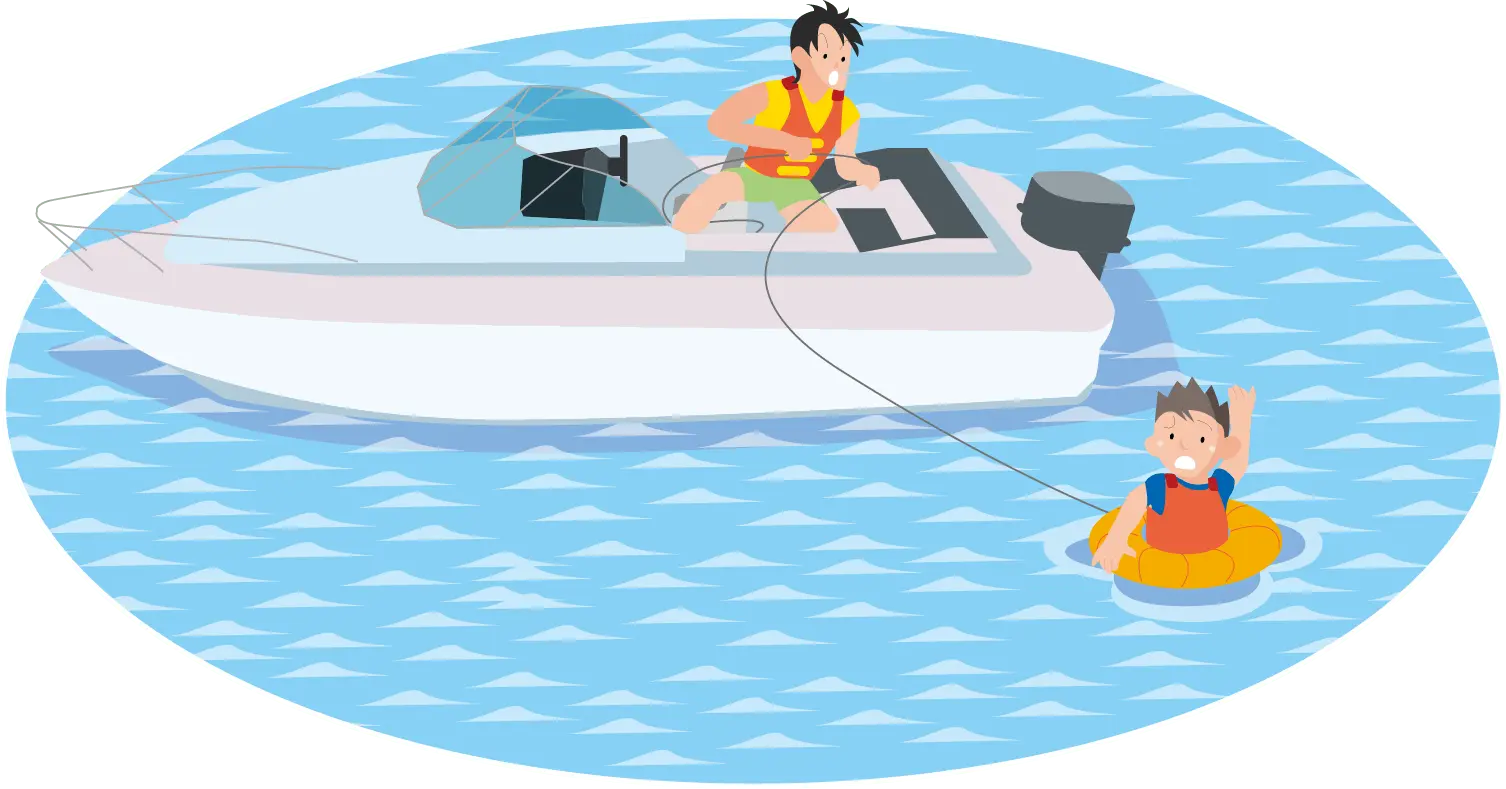
For the safety of small boats and accident prevention
Basic Rules
Rules of the River have been formulated to prevent accidents and promote safety in the lower reaches of the Kiso Three Rivers.
Follow the rules, and take note of the following.
-
1
Do Not Disturb Local Residents
People live along the river.
- Do not operate boats at night or early in the morning
- Do not use personal watercraft that are loud due to illegal modifications, etc.

-
2
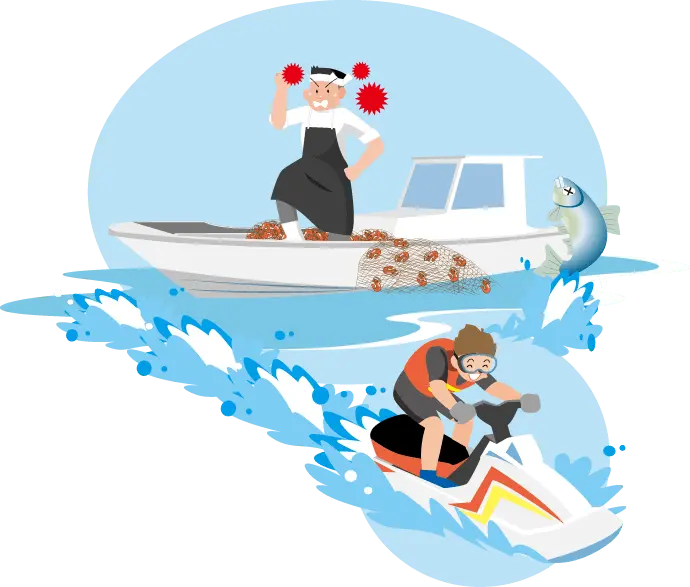
Do Not Disturb Fishermen
Fisherman operate throughout the year in all areas of the lower reaches of the Kiso Three Rivers.
- Give fishing boats, fishing grounds and fishing equipment a wide berth, and navigate carefully around them
-
3
Do Not Disturb Other People
on the WaterThere are many ways to enjoy rivers and riverbeds.
- Pay extra attention to your wake when passing near canoes, regattas and other manually powered watercraft.
- Do not park inconsiderately on riverbanks or do other things that disturb other people on the water (from May to October, parts of the bed of the Nagara River are used for triathlons)

-
4
Safety is Everyone’s Responsibility
There are distinct dangers in the lower reaches of the Kiso Three Rivers.
- Stay away from the Nagaragawa Dam and its intakes
- Be careful in shallow areas, around spur dikes, and near training jetties at the river mouth

Safety Rules for Motorboats,
Personal Watercraft, and Other Small Watercraft
For everyone’s safety, operators (captains) of motorboats, personal watercraft and other small watercraft are required by law to observe the following rules.
Act on Ships’ Officers and Boats’ Operators, Article 23, Paragraph 36
No Reckless Operation
rule 1- Do not create wake near swimmers.
- Do not go fast, make sharp turns, or zigzag near swimmers.
- Stay away from fishermen and manually powered watercraft.

No Operating While Intoxicated
rule 2Do not operate small watercraft when your alertness and judgment are significantly impaired; normal operation is not possible in this state.
- Drinking alcohol
- Illness
- Fatigue, etc.

Licensed Operators Only
rule 3No operating without a license
- Personal watercraft (all water areas)
- Boats (follow the Act on Port Regulations within the harbor, and the Maritime Traffic Safety Act while en route)

Wear a Life Jacket
rule 4In general, all passengers outside the cabin must wear life jackets.

Pre-Departure Inspections
rule 5Before departure, inspect fuel and oil levels, weather, waterway information, the condition of the hull, etc.

Lookouts
rule 6Always have a qualified lookout to watch the movements of other boats, the conditions of water areas, etc.
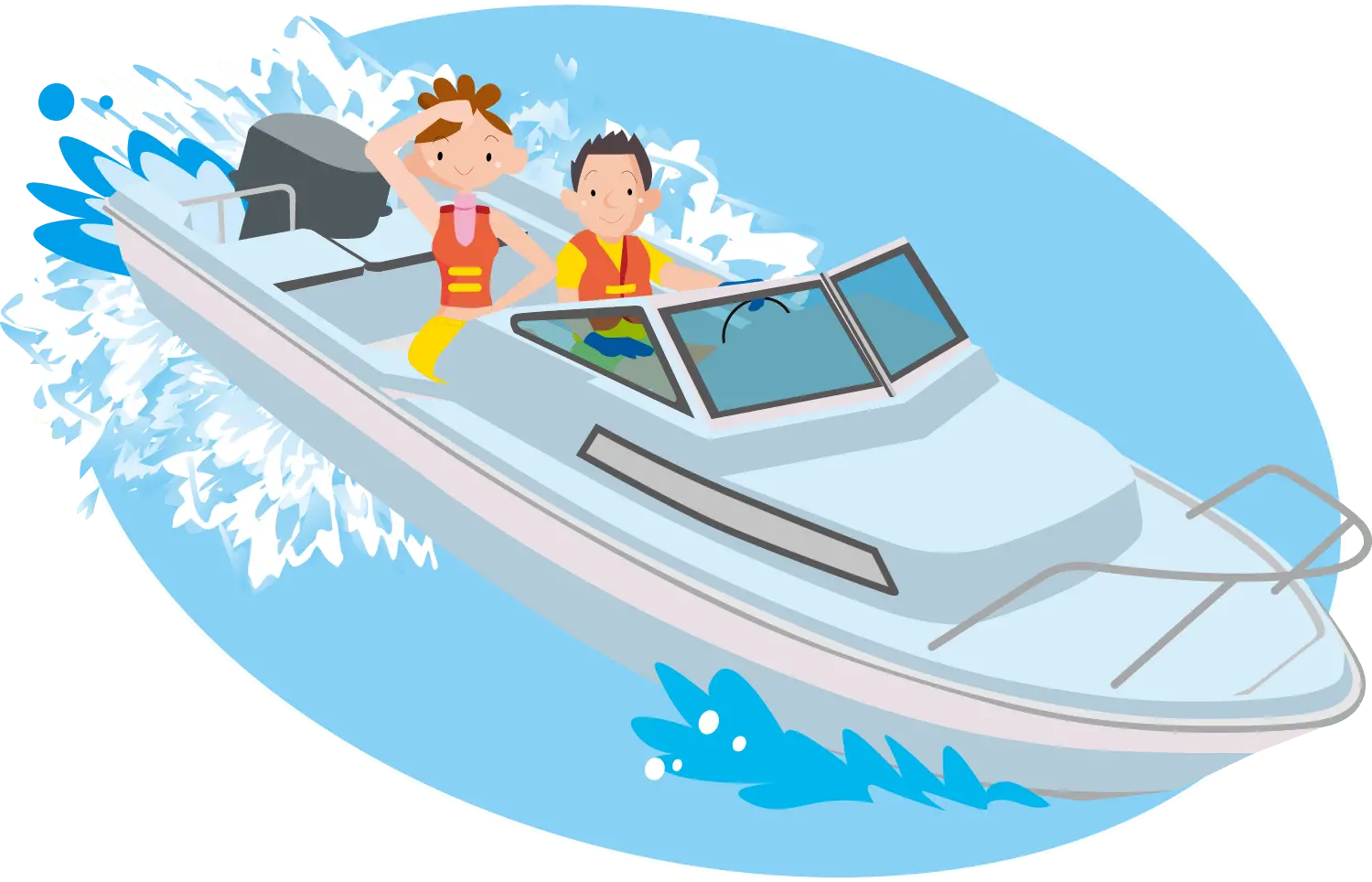
Lifesaving
rule 7When an accident occurs, exercise necessary measures with the utmost priority on saving lives.